Futsal rules to agree before your first indoor match
Understand the basic futsal rules, practise restarts and write clear timing, goalkeeper and substitution instructions for your group.
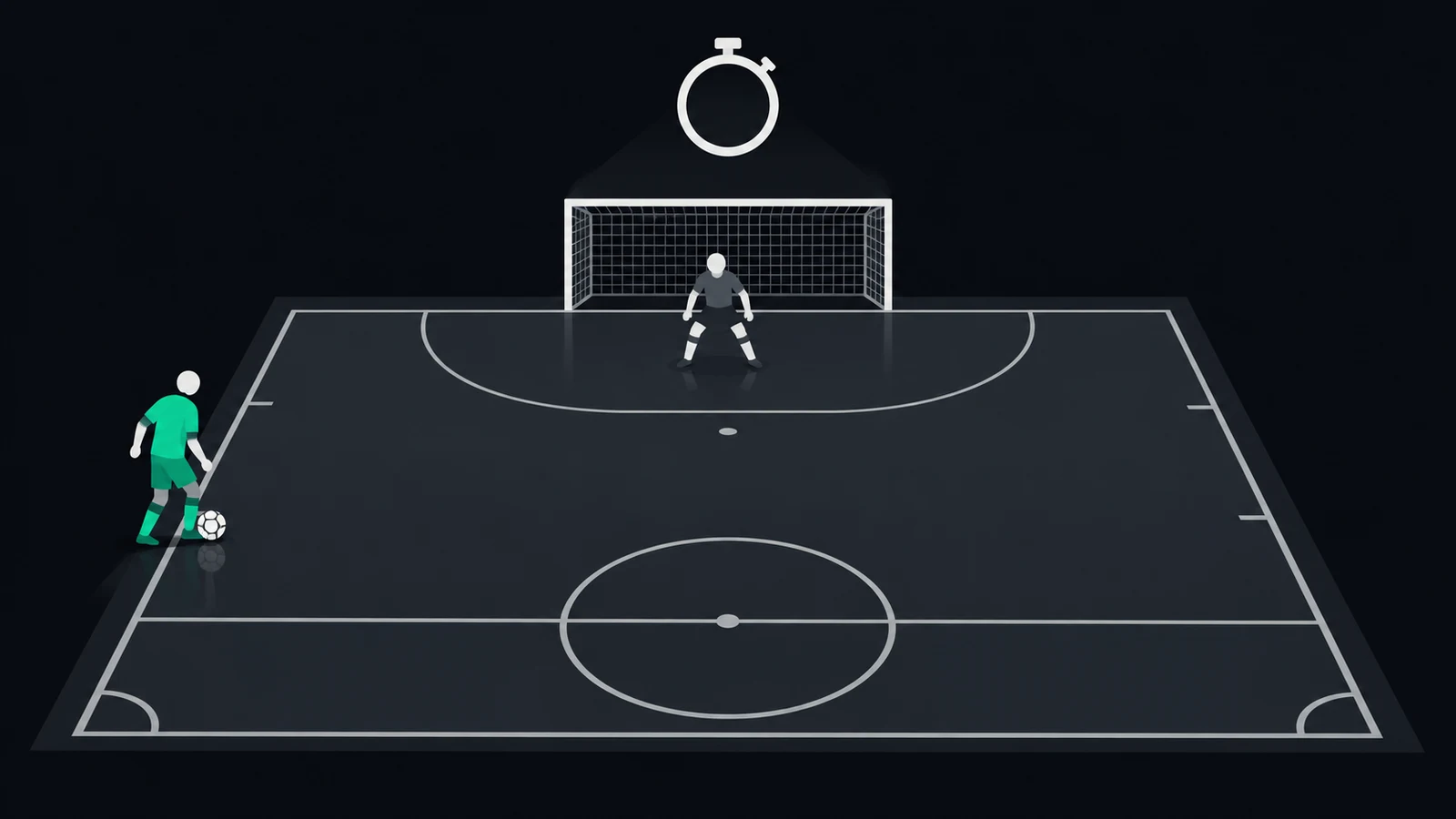
Learn the futsal rules that affect your first match, then agree how your recreational group will apply them.
The ball crosses the touchline and somebody picks it up for a throw-in. Another player says it should be kicked.
A goalkeeper receives a second pass, an opponent starts counting seconds and the argument continues while the booking clock runs. Everyone has played football before, but they have brought different versions of indoor football into the same hall.
I organise a Friday indoor group. That experience is a reason to settle the practical rules before playing, rather than assume the word “futsal” answers every question. Official futsal has a defined set of laws.
Recreational groups sometimes change match length or agree additional restrictions. This guide covers the basic differences and shows what to write down for your group. For an organised competition, use the organiser’s applicable laws and regulations when resolving a particular incident.
Agree which rules you are using before the first disputed restart.
Set-up → Restart → Agree
1. Establish the basic set-up
“Set-up” begins with what game is being played. Futsal has five players on each side on court, including a goalkeeper, and rolling substitutions. The ball is designed for reduced bounce.
There is no offside, and the touchline is a boundary rather than a wall to play off. See FIFA’s futsal introduction.
For your own session, separate the number playing from the number attending. Twelve participants can mean two teams with one substitute each. It does not mean twelve people should occupy the court together.
Set-up checks before a recreational futsal game
- Count players on court and substitutes separately
- Identify both goalkeepers or agree a rotation
- Check the ball and the marked playing area
- Explain the substitution area
- State which local adaptations apply
These are organising checks, not extra FIFA requirements. If your group uses a different number of players or plays rebounds off boards, explain the arrangement as your own version of indoor football.
For help with the roster and the booking, use the guide to organising an indoor match. Rules and attendance need separate attention.
State the game’s set-up clearly enough that newcomers know what to expect.
2. Separate playing time from the hall booking
Return to “Set-up” when you describe duration. Official futsal uses two twenty-minute periods of effective playing time, with the clock stopped when play stops.
A running-clock recreational session uses a different timing arrangement. UEFA explains the timing distinction.
Forty minutes of effective play is therefore not a promise that the whole event will fit into forty minutes of hall hire. Briefing, intervals and stoppages also use the booking.
Here is an illustrative arrangement for a sixty-minute recreational booking, rather than an official match format:
Illustrative timing for a one-hour hall booking
| Activity | Minutes |
|---|---|
| Preparation and rules check | 5 |
| First period using a running clock | 25 |
| Shared break | 5 |
| Second period using a running clock | 25 |
| Total | 60 |
If you adopt that arrangement, tell everyone when the clock continues and when you stop it. Assign one person to time the session. Avoid leaving both teams to use different phones and different interpretations of a stoppage.
Name the timing arrangement instead of describing every indoor booking as an official match.
3. Take touchline restarts with the foot
The “Restart” stage includes the kick-in. The ball is stationary on the touchline, opponents keep the required five-metre distance and the restart has a four-second limit once the player is ready under the law’s conditions.
You cannot score directly from a kick-in. Check the kick-in law.
Don’t turn this into a rule that every restart works identically. A kick-in is different from a corner or a goal clearance. Learn the action and the consequence for the particular restart you are taking.
For a first recreational game, rehearse one stationary restart before play. Place the ball, check the opponent’s distance and pass to a team-mate. This practical example makes the instruction easier to follow than a debate after the ball goes out.
A kick-in check to practise before playing
- Identify the correct restart location
- Stop the ball on the touchline
- Give opponents time to take the required position
- Restart promptly once ready
Practise the kick-in rather than importing the outdoor throw-in.
4. Explain the goalkeeper’s restrictions separately
“Restart” also needs a goalkeeper explanation. The four-second possession limit applies in the goalkeeper’s own half.
After playing the ball, the goalkeeper cannot touch it again in their own half following a deliberate team-mate pass unless an opponent has played or touched it. See the goalkeeper offences in Law 12.
A goal clearance is released by the goalkeeper with the hands from inside the penalty area. It is not an outdoor-style goal kick. The separate goal clearance law sets out that restart.
Before playing, ask each goalkeeper to explain when they can receive another pass. Have them distinguish their own half from the opponents’ half.
Discuss their answers with the people who will keep goal. Don’t expect an outfield player covering the position for the first time to infer the rule from shouted counting.
Explain goalkeeper possession and repeat touches before rotating people into goal.
5. Count the relevant fouls and avoid blanket tackle myths
“Agree” includes how you will handle infringements. Fouls punished with a direct free kick accumulate for each team within a period.
The sixth and later accumulated fouls lead to a special direct free kick without a wall, subject to the position rules; a penalty-area offence can require a penalty. See UEFA’s explanation of accumulated fouls.
Don’t reduce that to “every sixth whistle means a shot from ten metres”. Not every stoppage is an accumulated foul, and the restart location matters. If you are running a competition, give the count to the assigned officials.
A sliding action is not automatically forbidden merely because it is a slide. Its execution and danger matter under the foul definitions. A recreational group can separately agree to prohibit sliding challenges.
For our session, we’re not allowing sliding challenges against another player. This is an additional group rule. We’ll explain it to new players before they join the game.
Separate the official foul rules from additional restrictions your group chooses.
6. Agree substitutions and publish the session rules
Finish “Agree” with the actions everyone needs during play. Substitutions are unlimited, but the outgoing player must leave before the replacement enters, using the designated area. UEFA’s beginner guide describes the substitution procedure.
For a recreational session, write a short message covering timing, goalkeepers, restarts and any additional restriction. Include how you resolve an uncertain incident. If there is no referee, agree who makes the decision rather than replaying the argument after each challenge.
Before sharing teams, check that each side has a workable goalkeeper arrangement. The guide to preparing fair line-ups explains why rating totals alone cannot settle playing roles.
In SpinMyTeam, you can put your group’s practical instructions in the match description alongside registrations. The app helps organise the session; it does not referee decisions on court.
Ask new participants to read the instructions before arriving. Keep the message short enough to find the answer during a break, and revise it when the group explicitly changes an arrangement.
Share the session rules with the match details and explain them to newcomers.
Futsal rules before your next game
- Establish player numbers, timing and the rules you are applying
- Skip assumptions copied from outdoor football or another hall
- Check whether newcomers understand restarts, goalkeeper restrictions and changes
Which rule causes most discussion in your group: kick-ins, backpasses or sliding challenges?